**Sudoku Directions: A Comprehensive Guide**
**Introduction**
Sudoku is a popular logic-based puzzle that has captured the interest of puzzle enthusiasts worldwide. Originating in Japan, this number-placement game has spread globally, attracting players of all ages. If you are new to Sudoku and looking for a comprehensive guide to get started, you’ve come to the right place. In this article, we will delve into the basic rules and strategies to help you begin your Sudoku journey.
**How to Play Sudoku**
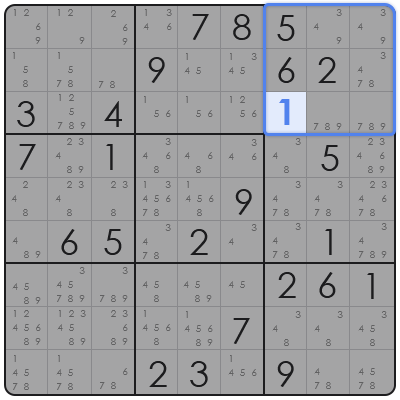
1. **Understand the Grid**: Sudoku is played on a 9×9 grid, divided into nine 3×3 subgrids called “boxes” or “blocks.” The objective is to fill each row, column, and box with the digits 1 through 9, ensuring that each number appears exactly once in each row, column, and box.
2. **Start with Easy Puzzles**: If you are new to Sudoku, it’s recommended to start with easy puzzles. This will help you get familiar with the rules and strategies without feeling overwhelmed.
3. **Look for Single Candidates**: Begin by scanning the grid for numbers that can only fit in one place. Mark these potential placements with a pencil or light pencil.
4. **Use the Process of Elimination**: If a number cannot fit in a row, column, or box, eliminate it from those cells. This can often lead to the placement of numbers that were previously undetermined.
5. **Look for Pairs, Triples, and Quads**: Sometimes, you may find two or more cells in the same row, column, or box that can only contain two, three, or four numbers, respectively. This is a great opportunity to narrow down your options.
6. **Avoid Guessing**: Try to solve Sudoku without guessing. While guessing can sometimes work, it can also lead to incorrect answers and wasted time.
7. **Check Your Work**: Periodically review your work to ensure that each row, column, and box contains all the digits from 1 to 9.
**Frequently Asked Questions (FAQ)**
**Q: Can I use a calculator or any electronic device to solve Sudoku?**
A: While it’s not against the rules to use a calculator or electronic device to solve Sudoku, the purpose of the game is to exercise your logical thinking skills. It’s recommended to solve Sudoku without any electronic aids to fully experience the challenge.
**Q: Are there different levels of Sudoku puzzles?**
A: Yes, Sudoku puzzles come in various difficulty levels, from easy to expert. The number of given clues and the complexity of the patterns in the grid determine the difficulty level.
**Q: Can I use a pencil to mark potential placements?**
A: Absolutely! Many Sudoku enthusiasts use a pencil to mark potential placements, which makes it easier to keep track of possibilities without overwriting your work.
**Q: Is it possible to solve a Sudoku puzzle without any given clues?**
A: Yes, it is possible to solve a Sudoku puzzle without any given clues. These types of puzzles are known as “empty grid Sudoku” or “diagonal Sudoku.” They require advanced techniques and are typically more challenging than puzzles with given clues.
**Q: How can I improve my Sudoku skills?**
A: To improve your Sudoku skills, practice regularly, try different difficulty levels, and learn new strategies. Reading books or online articles about Sudoku techniques can also help you become a more proficient solver.
By following these guidelines and frequently practicing, you’ll be well on your way to mastering the art of Sudoku. Happy solving!
