### How to Play Sudoku: Rules and Tips
#### Understanding Sudoku
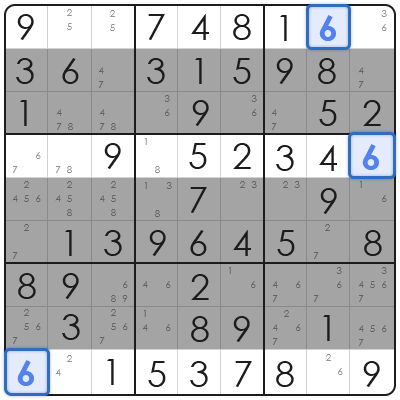
Sudoku is a popular puzzle game that involves filling a 9×9 grid with numbers. The objective is to place digits from 1 to 9 in such a way that each number appears exactly once in each row, column, and 3×3 subgrid. Here’s a basic overview of how to get started.
#### Rules of Sudoku
1. **Grid Layout**: A Sudoku grid is divided into nine 3×3 subgrids, also known as blocks or boxes. Each block contains nine cells.
2. **Number Placement**: The goal is to fill the grid so that each row, column, and 3×3 block contains all digits from 1 to 9. No number can repeat within any row, column, or block.
3. **Starting Grid**: Sudoku puzzles often begin with some numbers already filled in. These numbers are known as givens. Your task is to use these givens as a starting point to fill in the rest of the grid.
4. **Logical Deduction**: Sudoku is a game of logic and deduction. You must use logical reasoning to determine the correct number for each empty cell, based on the numbers already present in the grid.
#### Tips for Solving Sudoku
– **Start with Easy Puzzles**: If you are new to Sudoku, begin with easier puzzles to understand the basic rules and techniques.
– **Look for Missing Numbers**: Focus on rows, columns, and blocks where certain numbers are missing. This can help you identify potential placements for those numbers.
– **Crosshatching**: This technique involves looking at the intersections of rows and columns within a block. It helps identify numbers that can be placed in empty cells based on the numbers in the rows and columns intersecting with the block.
– **Use Pencil Marks**: When you are unsure of a number, use pencil marks to temporarily indicate possible candidates for a cell. This can help you track your progress and avoid making mistakes.
#### Frequently Asked Questions (FAQ)
**Q1: What is the best way to start solving a Sudoku puzzle?**
A1: Begin by identifying rows, columns, and blocks that are missing certain numbers. Use these as a starting point to fill in the grid.
**Q2: Can I use a calculator or a computer program to solve Sudoku?**
A2: While it’s possible to use tools for solving Sudoku, the challenge and enjoyment of the game come from solving it manually using logical reasoning.
**Q3: Are there different difficulty levels in Sudoku?**
A3: Yes, Sudoku puzzles come in various difficulty levels, from easy to expert. Difficulty levels are determined by the number of givens and the complexity of the clues provided.
**Q4: Is there a strategy for solving Sudoku puzzles?**
A4: Yes, strategies like crosshatching, pencil marking, and identifying patterns can help you solve Sudoku puzzles more efficiently.
**Q5: Can I solve a Sudoku puzzle without any givens?**
A5: Yes, it is possible to create and solve Sudoku puzzles with no givens. These puzzles are known as “blind” Sudoku and require even more advanced techniques to solve.
