### How to Start a Sudoku: A Beginner’s Guide
#### Understanding Sudoku
Sudoku is a popular puzzle game that combines logic, strategy, and number placement. It’s a fun and challenging way to stimulate your brain. Here’s a step-by-step guide to help you start solving Sudoku puzzles.
#### Step 1: Learn the Basics
Before you begin solving Sudoku, it’s essential to understand the basic rules:
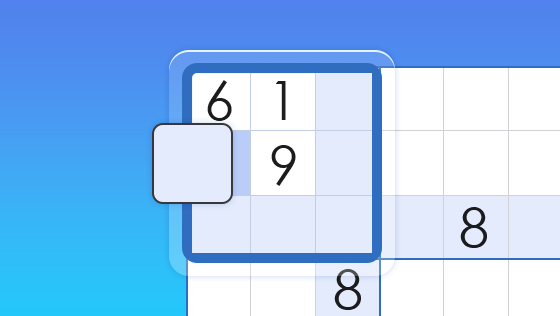
– A Sudoku grid is divided into nine 3×3 subgrids called “boxes.”
– Each row, column, and box must contain all of the digits from 1 to 9 without repetition.
#### Step 2: Choose a Puzzle
Select a Sudoku puzzle of your desired difficulty level. There are many online platforms, newspapers, and magazines that offer Sudoku puzzles.
#### Step 3: Start with Easy Clues
Begin by filling in the cells that have only one possible number. This is often referred to as an “easy clue.” Look for rows, columns, or boxes where only one number can fit based on the existing numbers.
#### Step 4: Use Process of Elimination
If a cell has two possible numbers, eliminate the other options by checking if the same number appears in the same row, column, or box. This will help you narrow down your choices.
#### Step 5: Look for Patterns
Sudoku puzzles often have patterns that can be exploited to solve the puzzle more quickly. Look for sequences of numbers that repeat or have gaps that can be filled in.
#### Step 6: Work Your Way Through the Grid
Continue to fill in cells, using the process of elimination and pattern recognition. Be patient and systematic in your approach.
#### Step 7: Double-Check Your Work
As you fill in the grid, periodically check your work to ensure that no rows, columns, or boxes are missing any numbers.
#### Step 8: Solve for Satisfaction
Once you’ve filled in all the cells, you’ve solved the puzzle! Take pride in your accomplishment and consider trying more challenging puzzles to improve your skills.
### Frequently Asked Questions (FAQ)
**Q: What is the goal of Sudoku?**
A: The goal of Sudoku is to fill a 9×9 grid with numbers so that each column, each row, and each of the nine 3×3 subgrids that compose the grid (also called “boxes”, “blocks”, or “regions”) contain all of the digits from 1 to 9.
**Q: How do I know when I’ve solved a Sudoku puzzle?**
A: When you’ve filled in all the cells with the correct numbers, and each row, column, and 3×3 subgrid contains all the digits from 1 to 9 without repetition, you’ve solved the puzzle.
**Q: Are there different types of Sudoku puzzles?**
A: Yes, there are various types of Sudoku puzzles, including standard 9×9 Sudoku, Mini Sudoku (6×6), Sudoku X (also known as Killer Sudoku), and many more with different variations and rules.
**Q: Can I use a calculator or scratch paper to solve Sudoku?**
A: While using a calculator or scratch paper isn’t against the rules, the challenge of Sudoku is often in doing it mentally. However, if you’re just starting out, using these tools can help you learn the techniques and strategies.
**Q: Is there an age limit for playing Sudoku?**
A: No, Sudoku is suitable for players of all ages. It’s a great activity for both children and adults, and it can be an excellent way to improve cognitive skills.
**Q: Can I solve Sudoku puzzles online?**
A: Absolutely! There are numerous websites and apps that offer Sudoku puzzles for free. You can solve them online or download them to your device for offline play.
