## Non-Consecutive Sudoku Solver: A Comprehensive Guide
### Introduction
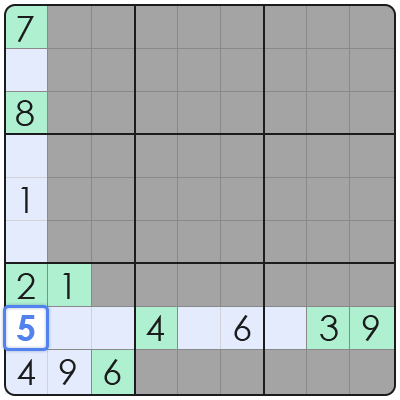
Sudoku is a popular puzzle game that requires players to fill a 9×9 grid with digits so that each column, each row, and each of the nine 3×3 subgrids that compose the grid contain all of the digits from 1 to 9. One of the unique challenges in solving Sudoku is to ensure that no two cells in the same row, column, or 3×3 subgrid have consecutive numbers. In this article, we will explore the concept of a non-consecutive Sudoku solver and how it can assist Sudoku enthusiasts in solving complex puzzles.
### How Non-Consecutive Sudoku Solvers Work
A non-consecutive Sudoku solver is a tool or algorithm designed to help players find solutions to Sudoku puzzles while adhering to the non-consecutive constraint. Unlike traditional Sudoku solvers that focus on filling the grid with numbers from 1 to 9, non-consecutive Sudoku solvers take an additional step to ensure that no two cells have consecutive numbers.
Here’s a simplified explanation of how a non-consecutive Sudoku solver works:
1. **Grid Setup**: The solver begins by setting up the Sudoku grid with given numbers and empty cells.
2. **Constraint Checking**: For each empty cell, the solver checks the potential numbers that can be filled while adhering to the non-consecutive rule.
3. **Backtracking**: If a number is found to violate the non-consecutive rule, the solver backtracks and tries another number for that cell.
4. **Recursion**: The process of checking and backtracking continues recursively until a valid solution is found or all possibilities are exhausted.
### Advantages of Using Non-Consecutive Sudoku Solvers
1. **Enhanced Challenge**: Non-consecutive Sudoku solvers can be used to create more challenging puzzles that require players to think beyond the traditional rules.
2. **Solution Verification**: The solvers can help verify the correctness of a player’s solution by ensuring that it adheres to the non-consecutive rule.
3. **Educational Tool**: They can serve as an educational tool to teach players about the intricacies of Sudoku and logical reasoning.
### Frequently Asked Questions (FAQ)
**Q1: Can a non-consecutive Sudoku solver solve standard Sudoku puzzles?**
A1: Yes, a non-consecutive Sudoku solver can solve standard Sudoku puzzles by ignoring the non-consecutive constraint and focusing on filling the grid with numbers from 1 to 9.
**Q2: Are non-consecutive Sudoku solvers more complex to implement than standard solvers?**
A2: Yes, they are more complex. The additional step of ensuring non-consecutive numbers adds an extra layer of logic and computation to the solver.
**Q3: Can a non-consecutive Sudoku solver solve puzzles with more than 9 digits?**
A3: No, currently, non-consecutive Sudoku solvers are designed for the 9×9 grid standard. They can’t be directly applied to puzzles with more or fewer digits.
**Q4: How can I create my own non-consecutive Sudoku puzzle?**
A4: You can create your own non-consecutive Sudoku puzzle by following the traditional Sudoku rules and ensuring that no two cells in the same row, column, or 3×3 subgrid have consecutive numbers.
**Q5: Are there any limitations to non-consecutive Sudoku solvers?**
A5: Yes, the complexity of the puzzles and the solver’s computational power can be limitations. Very complex puzzles may require significant processing time to solve.
In conclusion, a non-consecutive Sudoku solver is a valuable tool for Sudoku enthusiasts who want to challenge themselves with more complex puzzles. By adhering to the non-consecutive rule, these solvers provide an enhanced level of difficulty and fun for players of all skill levels.
