### Sudoku Regulation: A Comprehensive Guide
#### Sudoku Basics
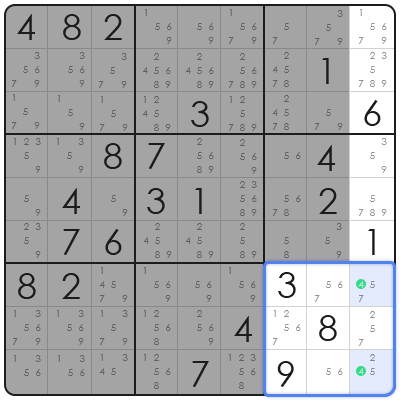
Sudoku is a popular puzzle game that requires players to fill a 9×9 grid with digits so that each column, each row, and each of the nine 3×3 subgrids that compose the grid (also called “boxes”, “blocks”, or “regions”) contain all of the digits from 1 to 9. The puzzle setter provides a partially completed grid, which for a well-posed puzzle has a single solution.
#### Grid Structure
– **Standard Sudoku Grid**: The standard Sudoku grid is a 9×9 grid divided into nine 3×3 subgrids.
– **Additional Variations**: There are variations with different grid sizes, such as 4×4, 5×5, and larger, but the 9×9 grid is the most common.
#### Rules
1. **Unique Solution**: Each row, column, and 3×3 subgrid must contain the digits 1 to 9 without repetition.
2. **No Duplicates**: No number may appear more than once in any row, column, or 3×3 subgrid.
3. **Start with Clues**: The grid starts with some cells filled in, known as “givens” or “clues.”
#### How to Solve Sudoku
– **Start with Givens**: Begin by filling in any cells that have a single possible number.
– **Use Process of Elimination**: Eliminate numbers from the list of possibilities for each cell by looking at the numbers already in the row, column, and subgrid.
– **Look for Patterns**: Sometimes, patterns can be identified that allow you to place numbers without checking each possibility.
– **Progress Gradually**: Work through the grid systematically, filling in cells as you go.
#### Sudoku Regulation FAQ
**Q: What is the minimum number of givens required for a well-posed Sudoku puzzle?**
A: A well-posed Sudoku puzzle typically requires at least 17 givens. If there are fewer than 17 givens, the puzzle may not have a unique solution.
**Q: Can a Sudoku puzzle have more than one solution?**
A: Yes, a Sudoku puzzle can have more than one solution if there are not enough givens to ensure a unique solution. However, well-posed Sudoku puzzles should have only one solution.
**Q: Are there different types of Sudoku puzzles?**
A: Yes, there are many variations of Sudoku, including Jigsaw Sudoku, Diagonal Sudoku, and Sudoku X, among others. Each variation introduces additional rules or constraints.
**Q: Can Sudoku puzzles be solved using a computer?**
A: Yes, Sudoku puzzles can be solved using computer algorithms. However, many players enjoy the challenge of solving Sudoku puzzles by hand.
**Q: Is there a strategy to solve Sudoku puzzles quickly?**
A: While there is no one-size-fits-all strategy, some players find that using a combination of process of elimination, pattern recognition, and logical reasoning can help solve puzzles more quickly.
**Q: Can Sudoku puzzles be used as a learning tool?**
A: Yes, Sudoku puzzles can be used as a learning tool to improve cognitive skills such as concentration, memory, and logical reasoning.
#### Conclusion
Sudoku is a versatile and engaging puzzle game that can be enjoyed by players of all ages and skill levels. By understanding the basic rules and strategies, players can enjoy the challenge of solving Sudoku puzzles and potentially improve their cognitive abilities in the process.
