### Hard Sudoku How-to Guide
#### Understanding Hard Sudoku
Hard Sudoku puzzles are a step above the standard Sudoku games. They require advanced strategies and problem-solving skills to solve. In this guide, we will explore the techniques and methods needed to tackle hard Sudoku puzzles effectively.
#### 1. Basic Sudoku Rules
Before diving into hard Sudoku strategies, it’s essential to understand the basic rules of Sudoku. A Sudoku puzzle consists of a 9×9 grid divided into nine 3×3 subgrids, called “boxes” or “blocks.” The objective is to fill the grid with numbers so that each row, each column, and each of the nine 3×3 subgrids contain all of the digits from 1 to 9. Each row, column, and box can only contain one instance of each number.
#### 2. Advanced Techniques
**2.1. Hidden Pairs and Triples**
Hidden pairs and triples occur when two or three numbers can only be placed in two or three specific cells within a row, column, or box. By identifying these patterns, you can narrow down the possibilities for other cells in the same row, column, or box.
**2.2. X-Wing and Swordfish**
X-Wing and Swordfish are strategies that involve identifying patterns in rows or columns. These patterns can help you eliminate numbers from potential cells in other rows or columns, making the puzzle easier to solve.
**2.3. XY-Wing**
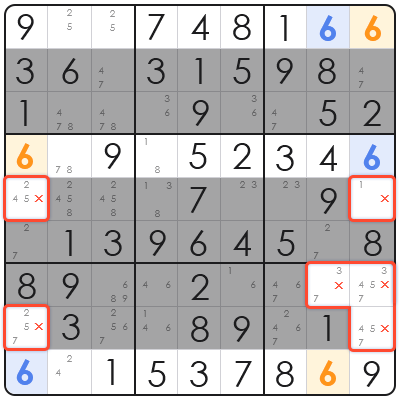
The XY-Wing strategy is a more complex technique that involves identifying a chain of three cells, where two of the cells have the same number and the third cell can only be one of two numbers. This can lead to the elimination of a number in another cell.
#### 3. Solving a Hard Sudoku Puzzle
**3.1. Start with Easy Pairs and Puzzles**
Begin by solving the easier puzzles or pairs first. This will help you get into the rhythm of solving Sudoku and build your confidence.
**3.2. Use Process of Elimination**
When you can’t determine the exact number for a cell, use the process of elimination to narrow down the possibilities. Eliminate numbers that cannot possibly fit in a cell based on the rules of Sudoku.
**3.3. Look for Patterns**
As you fill in the grid, keep an eye out for patterns. These can be hidden pairs, triples, or more complex strategies like X-Wing and Swordfish.
**3.4. Be Patient and Methodical**
Solving a hard Sudoku puzzle requires patience and methodical thinking. Take your time to analyze each cell and consider all possible options before making a decision.
#### Frequently Asked Questions (FAQ)
**Q: What is the difference between hard and easy Sudoku puzzles?**
A: The main difference is the complexity of the puzzle. Hard Sudoku puzzles have more complex patterns and require advanced strategies to solve, while easy puzzles are more straightforward and can be solved using basic techniques.
**Q: Can I use a calculator or computer to solve hard Sudoku puzzles?**
A: While you can use a calculator or computer to solve Sudoku puzzles, the challenge and satisfaction of solving them manually are part of the experience. It’s recommended to try solving them without assistance to develop your skills.
**Q: Are there any shortcuts to solving hard Sudoku puzzles?**
A: While there are strategies and techniques that can help you solve hard Sudoku puzzles more quickly, there are no shortcuts. Developing your problem-solving skills and understanding the patterns in Sudoku puzzles are key to solving them effectively.
**Q: Can I solve a hard Sudoku puzzle without using advanced strategies?**
A: It’s possible, but it will be much more challenging. Advanced strategies are designed to help you identify patterns and eliminate possibilities more efficiently, making the puzzle easier to solve.
**Q: How can I improve my Sudoku-solving skills?**
A: Practice is the best way to improve your Sudoku-solving skills. Try solving a variety of puzzles at different difficulty levels, and don’t be afraid to challenge yourself with harder puzzles as you become more proficient. Additionally, studying different strategies and techniques can help you become a more skilled Sudoku solver.
