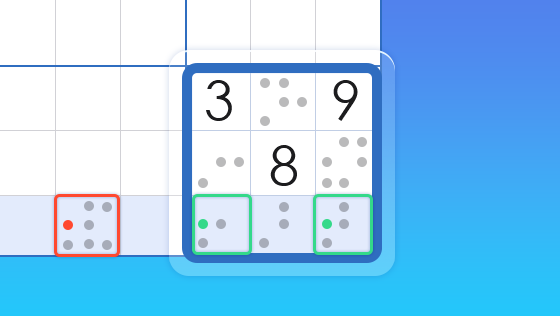
**Sudoku Diagonal Pattern: Understanding the Basics and Strategies**
**Introduction**
Sudoku, a popular puzzle game, has captivated millions around the world with its engaging and challenging gameplay. One of the key features of Sudoku is the presence of diagonal patterns, which add an extra layer of complexity to the game. In this article, we will delve into the basics of Sudoku diagonal patterns, their importance, and various strategies to solve them effectively.
**What is a Sudoku Diagonal Pattern?**
A Sudoku diagonal pattern refers to a specific arrangement of numbers that runs diagonally across the Sudoku grid. In a standard 9×9 Sudoku grid, there are two main diagonal patterns: the left diagonal and the right diagonal. The left diagonal runs from the top-left corner to the bottom-right corner, while the right diagonal runs from the top-right corner to the bottom-left corner.
**Importance of Sudoku Diagonal Patterns**
1. **Challenge**: Diagonal patterns add an additional level of challenge to the Sudoku puzzle, making it more engaging and rewarding for players.
2. **Pattern Recognition**: Identifying diagonal patterns can help players recognize patterns and make educated guesses, leading to faster and more accurate solving.
3. **Verification**: Diagonal patterns serve as an internal check to ensure that the solution is correct. If a diagonal pattern is not satisfied, the solution is invalid.
**Strategies to Solve Sudoku Diagonal Patterns**
1. **Observe and Analyze**: Start by observing the diagonal patterns in the Sudoku grid. Identify any numbers or missing spaces that could be filled in based on the pattern.
2. **Use Process of Elimination**: When faced with a diagonal pattern that contains missing numbers, use the process of elimination to determine the possible values for each space. Eliminate any numbers that cannot fit based on the pattern.
3. **Consider Symmetry**: Take advantage of the symmetry in diagonal patterns to solve the puzzle. If a number is present in one corner, there is a good chance it will also be present in the opposite corner of the diagonal pattern.
4. **Cross-Check**: After filling in a number in a diagonal pattern, cross-check to ensure that it doesn’t violate any other rules or patterns in the Sudoku grid.
**Frequently Asked Questions (FAQ)**
**Question 1: What is the purpose of diagonal patterns in Sudoku?**
Answer: Diagonal patterns add complexity to the Sudoku puzzle, challenging players to recognize patterns and make educated guesses. They also serve as an internal check to verify the correctness of the solution.
**Question 2: How many diagonal patterns are there in a standard 9×9 Sudoku grid?**
Answer: There are two diagonal patterns in a standard 9×9 Sudoku grid: the left diagonal and the right diagonal.
**Question 3: Can a diagonal pattern be used to solve a Sudoku puzzle?**
Answer: Yes, diagonal patterns can be used to solve a Sudoku puzzle. By identifying and filling in missing numbers based on the pattern, players can make progress and solve the puzzle more effectively.
**Question 4: How can I improve my ability to recognize diagonal patterns in Sudoku?**
Answer: Practice! Play Sudoku regularly and focus on identifying diagonal patterns in the puzzles. The more you practice, the better you will become at recognizing and using diagonal patterns to solve Sudoku puzzles.
By understanding the basics of Sudoku diagonal patterns and implementing effective strategies, players can enhance their puzzle-solving skills and enjoy a more engaging Sudoku experience. Happy solving!
