### How to Play Sudoku: A Comprehensive Guide
#### Sudoku Basics
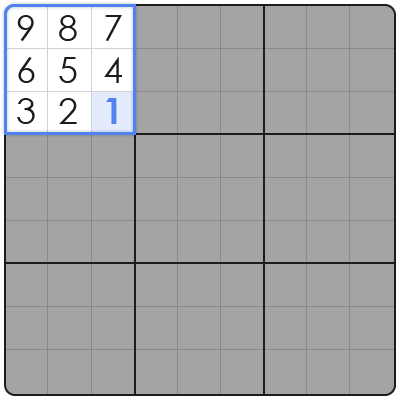
Sudoku is a logic-based, combinatorial number-placement puzzle. The objective is to fill a 9×9 grid with digits so that each column, each row, and each of the nine 3×3 subgrids that compose the grid (also called “boxes”, “blocks”, or “regions”) contain all of the digits from 1 to 9. The puzzle setter provides a partially completed grid, which for a well-posed puzzle has a single solution.
#### Grid Layout
A standard Sudoku grid is divided into nine 3×3 subgrids, each of which is called a “box”, “block”, or “region”. These boxes are further divided into rows and columns.
#### How to Start
1. **Understand the Grid**: Before you start, familiarize yourself with the 9×9 grid and its subgrids.
2. **Fill in Given Numbers**: If there are any numbers already filled in, take note of them.
3. **Look for Single Candidates**: In each box, row, and column, look for a digit that can only fit in one cell.
#### Strategies
1. **Single Candidate**: If a number can only go in one place in a row, column, or box, place it there.
2. **Pencil Marking**: Use pencil marks to keep track of potential candidates for each cell.
3. **Cross-Hatching**: This involves eliminating numbers from potential candidates based on their presence in other rows, columns, or boxes.
4. **Unique Rectangle**: Identify rectangles with only four cells left and each containing two different numbers. If one number is placed, the other must go in the remaining cell.
5. **X-Wing and Swordfish**: These are more advanced strategies that involve finding patterns across multiple rows or columns.
#### Tips
– **Start with Easy Puzzles**: If you’re new to Sudoku, begin with easier puzzles and gradually increase the difficulty.
– **Take Your Time**: Don’t rush. Take the time to analyze each cell carefully.
– **Avoid Guessing**: Try to fill in each cell logically without guessing.
– **Use pencil marks**: They are helpful for keeping track of potential candidates and can be erased when a number is confirmed.
#### Frequently Asked Questions (FAQ)
**Q: Can I use a calculator or a computer program to solve Sudoku?**
A: While it’s possible to use a calculator or a computer program to solve Sudoku, the challenge and satisfaction of solving it manually are part of the experience. However, if you’re learning, a program can be a useful tool to understand how Sudoku works.
**Q: Are there different types of Sudoku?**
A: Yes, there are various types of Sudoku, including traditional, jigsaw, killer, and diagonal Sudoku, each with unique rules and patterns.
**Q: How do I know when I’ve solved the puzzle?**
A: When every row, column, and 3×3 subgrid contains the digits 1 through 9 exactly once, you’ve solved the puzzle. If you’re still unsure, you can use a solver to verify your answer.
**Q: Can I solve a Sudoku puzzle with fewer than 17 given numbers?**
A: No, a well-posed Sudoku puzzle must have at least 17 given numbers to ensure there is a unique solution. If a puzzle has fewer, it’s likely to be unsolvable or have multiple solutions.
**Q: Is it possible to solve a Sudoku puzzle without using any strategies?**
A: It is possible to solve Sudoku without explicit strategies, but it’s less efficient. Most solvers use some form of strategy to find the solution more quickly.
