### Sudoku vs. Rubik’s Cube: A Comprehensive Guide to Rules and Strategies
#### Sudoku
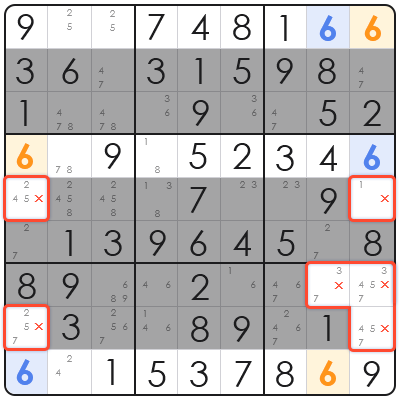
Sudoku is a logic-based combinatorial number-placement puzzle. The objective is to fill a 9×9 grid with digits so that each column, each row, and each of the nine 3×3 subgrids that compose the grid (also called “boxes”, “blocks”, or “regions”) contain all of the digits from 1 to 9.
**Basic Rules:**
1. **Grid Structure:** The grid is divided into nine 3×3 subgrids.
2. **Number Placement:** Each row, column, and 3×3 subgrid must contain the numbers 1 through 9 without repetition.
3. **Starting Grid:** The grid starts with some of the cells filled in. The numbers in these cells are given and cannot be changed.
**Strategies:**
1. **Crosshatching:** Identify rows, columns, and subgrids that contain the same numbers and eliminate those numbers from other cells in the same row, column, or subgrid.
2. **Pencilmarking:** Use pencil to mark possible numbers in each cell until a solution is found.
3. **Guessing and Backtracking:** If you reach a point where you cannot logically determine a number, you can guess a number and backtrack if it leads to a contradiction.
#### Rubik’s Cube
The Rubik’s Cube is a 3D puzzle consisting of a cube of smaller cubes, each of which can be rotated independently to achieve a desired configuration.
**Basic Rules:**
1. **Cube Structure:** The cube consists of 6 faces, each divided into 9 smaller squares.
2. **Color Coding:** Each face is a different color.
3. **Rotation:** You can rotate the cube’s faces to mix up the colors, and you can also rotate the entire cube.
**Strategies:**
1. **Notation:** Learn the standard notation for each face and the movements to rotate them.
2. **Cross:** Solve the cross first by aligning the center pieces of each face.
3. **F2L (First Two Layers):** Solve the first two layers of the cube.
4. **OLL (Orientation of the Last Layer):** Solve the orientation of the last layer.
5. **PLL (Permutation of the Last Layer):** Solve the permutation of the last layer.
#### Frequently Asked Questions (FAQ)
**Q: What is the difference between Sudoku and Rubik’s Cube?**
A: Sudoku is a 2D logic puzzle focused on number placement, while Rubik’s Cube is a 3D mechanical puzzle that involves rotating the cube to match colors on each face.
**Q: How many possible solutions are there for a standard Sudoku puzzle?**
A: There are 6,670,903,752,021,072,936,960 possible solutions for a standard Sudoku puzzle.
**Q: Can a Rubik’s Cube be solved blindfolded?**
A: Yes, it is possible to solve a Rubik’s Cube blindfolded. This requires advanced techniques and a strong memory.
**Q: Is there a difference between the Rubik’s Cube and the Rubik’s Speed Cube?**
A: Yes, the Rubik’s Speed Cube has more precision and better balance, making it ideal for competitive solving.
**Q: Can you solve Sudoku and Rubik’s Cube at the same time?**
A: While it is possible, it requires a high level of skill and concentration to solve both puzzles simultaneously.
